
How a Mortgage Calculator Works
A mortgage calculator is a digital tool that estimates loan repayments based on several financial factors. It calculates expected monthly payments and total interest over the loan tenure.
The tool works by applying a standard loan amortisation formula. This formula spreads loan repayments across a fixed period, combining both principal and interest. Most calculators require these details to produce estimates:
- Property purchase price or loan amount
- Loan tenure, often expressed in years
- Interest rate applied by the lender
- Down payment amount or loan-to-value ratio
With all these details, the home loan calculator automatically generates repayment estimates. This helps users visualise how the loan will be repaid over time.
Understanding the Total Cost of Property Ownership
Total cost of ownership refers to the total financial commitment required to purchase and maintain a property over the life of the loan. This includes both the principal borrowed and the accumulated interest.
A mortgage calculator shows how interest affects the overall repayment amount. Even small variations in interest rates or loan tenure can significantly influence the final cost. Several factors shape the total cost of ownership:
- Loan principal borrowed from the lender
- Interest accrued throughout the repayment period
- Length of the loan tenure
- Changes in interest rate structures
Understanding these components allows buyers to move beyond the purchase price. Instead, they gain a clearer picture of long-term financial responsibility.
Key Inputs Used in a Home Loan Calculator
A home loan calculator relies on several financial inputs to produce repayment estimates. Each input directly affects the calculation's outcome.
- The first input is the loan amount, which represents the portion of the property price financed through borrowing. A larger loan amount typically results in higher monthly repayments.
- The second input is the loan tenure, which determines the length of time the borrower has to repay the loan. Longer tenures reduce monthly repayments but increase total interest paid.
- The third input is the interest rate, which reflects the cost of borrowing. Mortgage calculators use this rate to estimate the amount of interest that accumulates over the loan period.
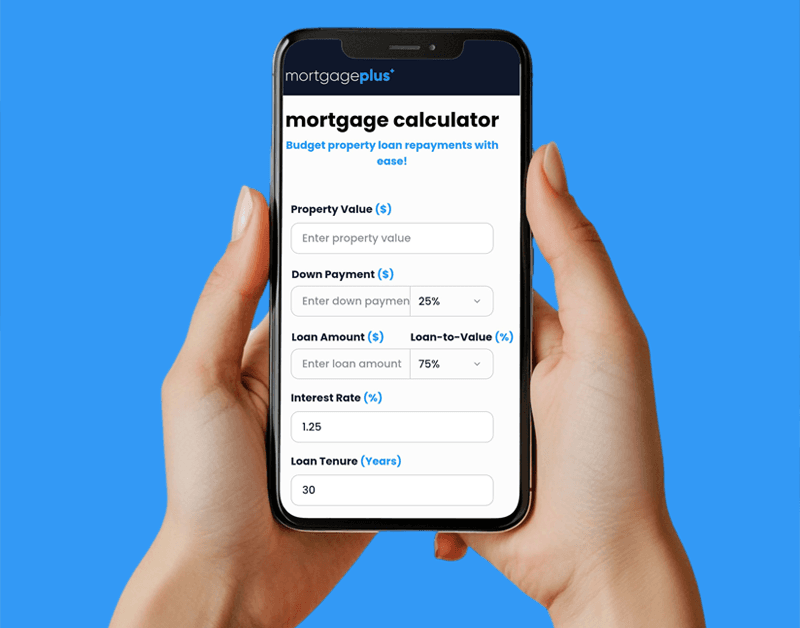
The down payment or equity portion influences the borrowing amount. A larger upfront payment reduces the loan principal and, in turn, lowers total repayment costs.
How Loan Tenure Affects Long-Term Repayment
Loan tenure refers to the total period during which a housing loan must be repaid. In Singapore, housing loans commonly range from 15 to 30 years, depending on the borrower's eligibility and the lender's policies.
A mortgage calculator illustrates how tenure affects repayment structure. Shorter tenures usually result in higher monthly payments but lower total interest paid. Longer tenures provide smaller monthly instalments. However, interest accumulates over a longer period, which increases the overall repayment amount.
When analysing tenure options, buyers should consider several aspects:
- Monthly repayment affordability
- Long-term financial commitments
- Expected income stability
- Retirement planning timelines
These considerations help determine a tenure that balances affordability and long-term cost.
The Role of Interest Rates in Mortgage Calculations
Interest rates represent the cost lenders charge for borrowing funds. Even small differences in interest rates can significantly affect loan repayments.
At mortgageplus, our home loan calculator allows Singapore users to simulate different interest scenarios. This helps illustrate how fluctuations in interest rates impact monthly payments and overall loan costs.
Mortgage interest structures may vary depending on lender policies. Common interest structures include:
- Fixed interest rates for a predetermined period
- Floating rates linked to market benchmarks
- Hybrid structures combining fixed and floating components
By adjusting the interest rate in our mortgage calculator, users can observe how repayment obligations change over time.
Using a Mortgage Calculator to Evaluate Affordability
Affordability refers to whether a borrower can comfortably manage monthly loan repayments without financial strain. Mortgage calculators are a useful tool for a preliminary affordability assessment.
A home loan calculator estimates monthly instalments based on loan inputs. This helps buyers compare repayment obligations with their income and existing financial commitments. When evaluating affordability, you should examine several financial indicators:
- Estimated monthly mortgage repayment
- Household income and income stability
- Existing debt obligations
- Savings and emergency funds
Using our calculators allows borrowers to assess these factors before making a property purchase decision.
How Our Mortgage Calculators Support Financial Planning
Mortgageplus offers a range of calculators designed to help property buyers and homeowners better understand different aspects of property financing. Rather than focusing solely on monthly mortgage repayments, these tools provide insights into borrowing capacity, affordability, and financing options.
- The Mortgage Calculator allows users to estimate monthly repayments based on factors such as property value, loan amount, interest rate, and loan tenure.
- The TDSR Calculator helps assess borrowing eligibility by factoring in income and existing debt obligations.
- The Equity Term Loan Calculator supports homeowners who want to evaluate financing options using the equity built up in their property.
Together, these calculators provide a more comprehensive view of property financing decisions.
Using mortgageplus Calculators Together
Each calculator serves a different purpose in the property financing journey. The mortgage calculator helps estimate monthly repayments and illustrates how interest rates and loan tenure affect long-term costs. This allows buyers to compare different financing scenarios before committing to a property purchase.
The TDSR Calculator focuses on affordability by showing how income and existing financial commitments influence the maximum loan amount a borrower may qualify for under Singapore's lending regulations. Meanwhile, the Equity Term Loan Calculator helps existing property owners explore how they may be able to unlock value from their property for other financial needs.
By using all three calculators together, you can gain a clearer understanding of borrowing limits and available financing options before speaking with a mortgage advisor.
Why Mortgage Calculators Are Useful Before Applying for a Loan
Mortgage calculators serve as preparation tools before submitting a housing loan application. They allow borrowers to estimate repayment commitments independently.
A mortgage calculator also helps individuals understand how lenders evaluate loan affordability. Many financial institutions assess similar variables when determining loan eligibility. Using the calculator early offers several advantages:
- Better preparation for loan discussions
- A clearer understanding of financial capacity
- More realistic property price expectations
- Reduced risk of over-borrowing
These insights support more informed decision-making when approaching lenders.
Limitations of Mortgage Calculators
Mortgage calculators provide estimates rather than exact repayment figures. The results depend on the accuracy of the input data and the assumptions used in the calculation.
Home loan calculators may not account for all the variables involved in a real loan agreement. Factors such as changing interest rates or lender-specific conditions may alter final repayments.
Some elements typically not reflected in standard calculations include:
- Changes in market interest rates
- Loan restructuring or refinancing
- Early repayment adjustments
- Lender-specific loan packages

For this reason, calculators should be used as a planning tool and combined with guidance from mortgage advisors to select the best home loan that suits your needs.
FAQ
- How accurate are mortgage calculator results?
Mortgage calculator estimates are generally accurate for planning purposes. However, they rely on simplified assumptions and fixed interest inputs. Final loan repayments may vary depending on lender terms and interest rate changes. - Can a mortgage calculator help determine loan affordability?
Yes, a mortgage calculator provides a basic way to estimate affordability. By comparing estimated repayments with monthly income and financial obligations, borrowers can determine whether a loan is manageable. - Why should homebuyers use a mortgage calculator before purchasing a property?
Using a mortgage calculator before purchasing helps buyers understand repayment commitments. It allows them to evaluate loan structures, interest scenarios, and long-term financial impact before making a property decision.
Discuss Housing Loan Options with mortgageplus
At mortgageplus, our mortgage calculator provides a structured way to estimate housing loan repayments and evaluate long-term financial commitments. By analysing loan amount, tenure, and interest rates, you can better understand how property financing affects the total cost of ownership.
Although our home loan calculators support informed planning by illustrating how different borrowing scenarios influence repayment obligations, they do not replace professional financial advice.
For individuals evaluating housing loan options, consulting professional advisors can provide additional clarity. Contact us today!